
Is Japanese Design Biophilic by Nature?

Earlier this month, I attended the inaugural Biophilic Design Conference, where experts from diverse fields such as education, conservation, healthcare, and architecture gathered to discuss the intersection of design and nature. What struck me most was how frequently Japan was referenced – whether through the concept of 森林浴 Shinrin-yoku (forest bathing), which promotes relaxation through […]
Where Minimalism Meets Warmth

At Yoko Kloeden Design, our passion lies in crafting spaces that blend the tranquility of nature with practical, modern living. One of our most celebrated projects, Essence of Japan, is a renovation of a 1960s architect-designed terrace in Ealing, London – a home transformed into a serene retreat deeply rooted in Japanese design philosophy. This […]
Japanese Designer’s Take on Japandi
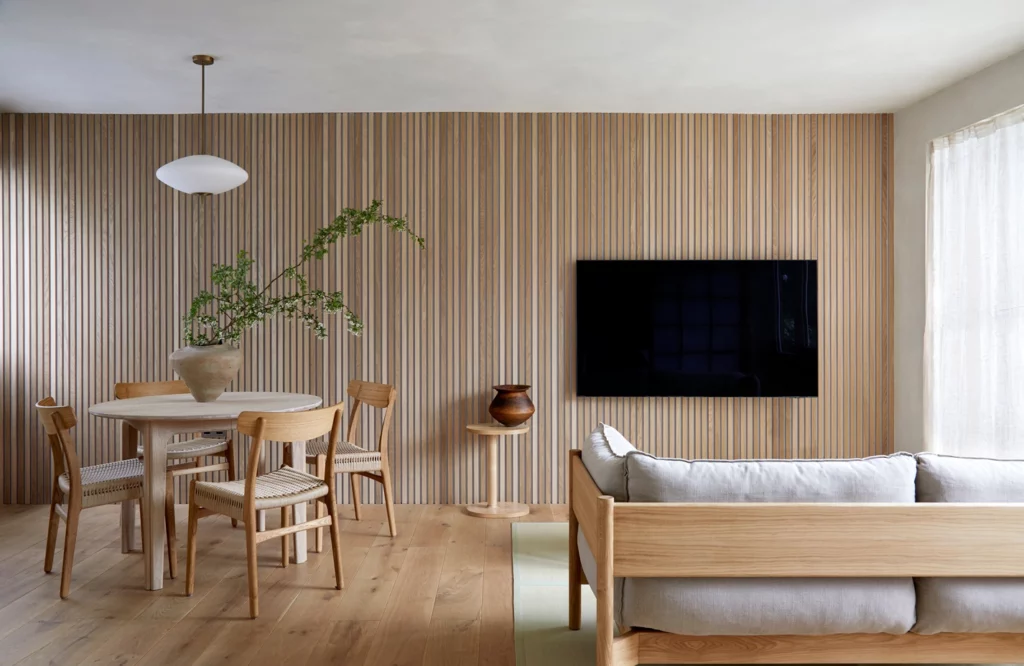
As a Japanese designer, I’ve frequently been asked to create Japandi interiors over the past few years. Japandi, a fusion of Japanese and Scandinavian Japanese design elements, has become a significant trend in the Western world. Japandi: a trend in interior design that combines elements of Japanese and Scandinavian styles.Source: Collins Dictionary Interestingly, when I […]
Beyond Sight and Sound
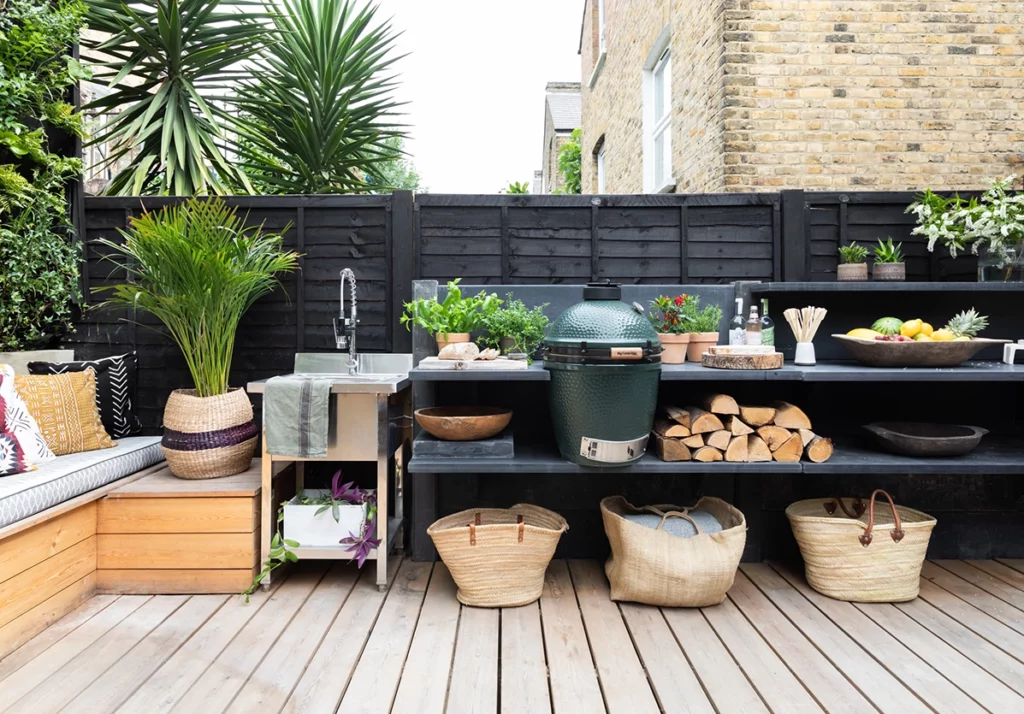
In a world overflowing with information, our senses are constantly on high alert. The majority of this information, especially in the digital realm, engages just two of our senses – sight and hearing. While our visual and auditory receptors (our eyes and ears) need time to rest, our other three senses remain underutilised in enhancing […]
Evoking the Essence of Japan
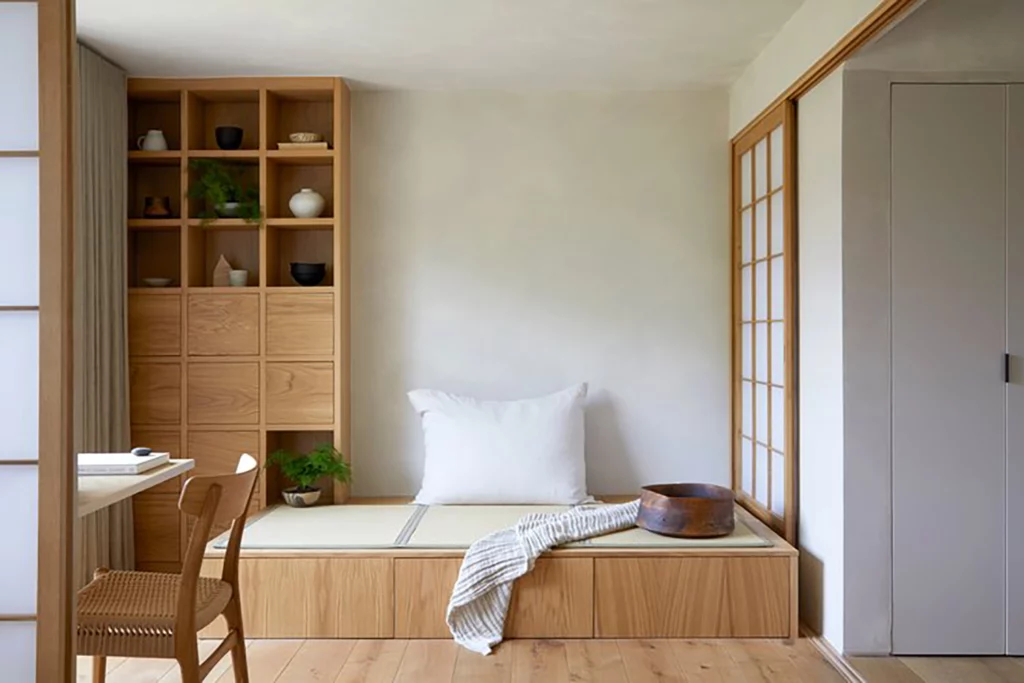
In spring last year, we created a Japan-inspired peaceful haven in Ealing, London for a professional couple who recently emigrated from Hong Kong. The couple had a deep appreciation for Japanese culture, and tasked us with bringing their vision to life. Sustainability and ethical sourcing were top priorities. The result is a pocket of peace […]
Design Principles – 5. Taru O Shiru (Less is More)
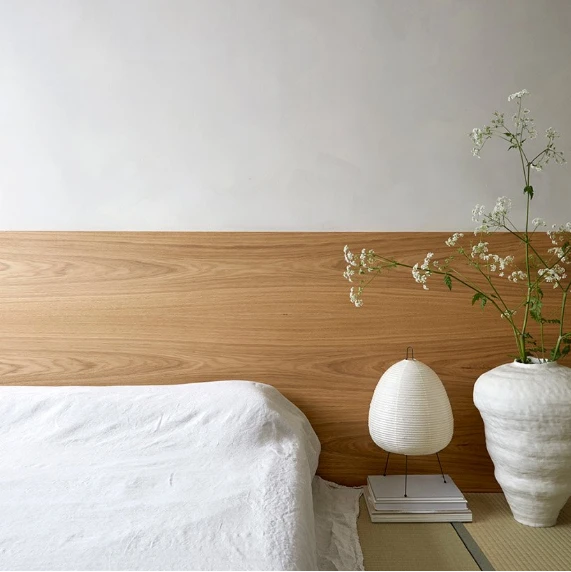
Taru o Shiru (足るを知る) translates directly as knowing what is enough — a principle of sufficiency rather than scarcity, and one that sits closer to editing than to minimalism. At Ryōan-ji in Kyoto a stone tsukubai water basin carries four characters, 吾唯足知, arranged around a central square opening that doubles as the radical each one […]
Design Principles – 4. Shizen (Nature)
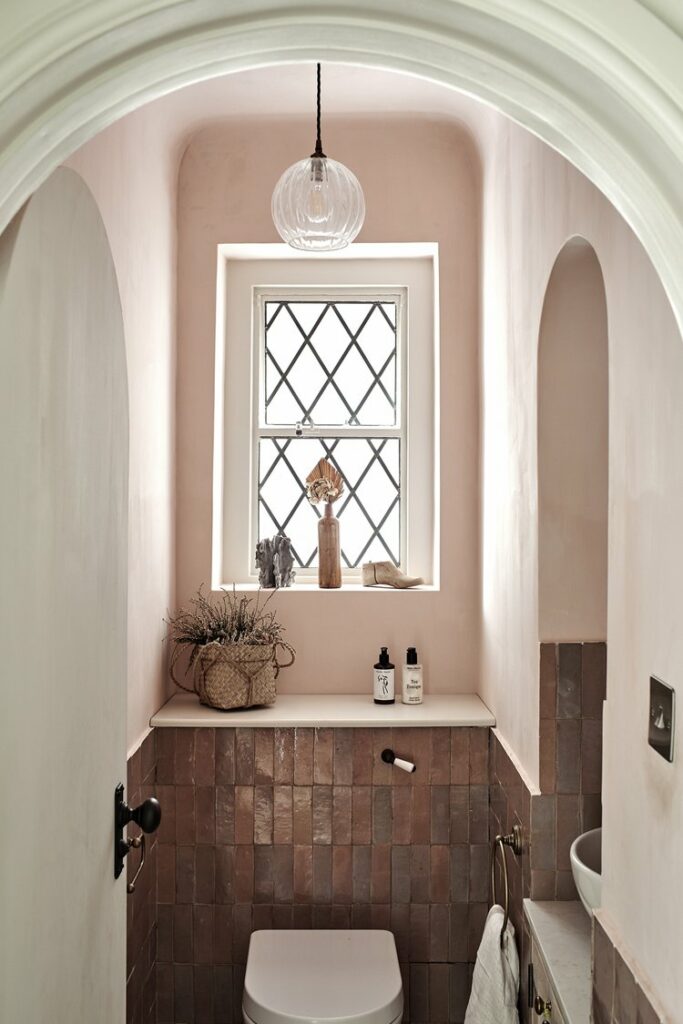
Shizen (自然) is the Japanese design principle of working with nature rather than decorating with it — choosing materials that breathe, age and register the season, so the natural world is structural to a room rather than applied to it. The thinking comes from the tea house. The chashitsu formalised in the sixteenth century, as […]
Design Principles – 3. Ma (Space)
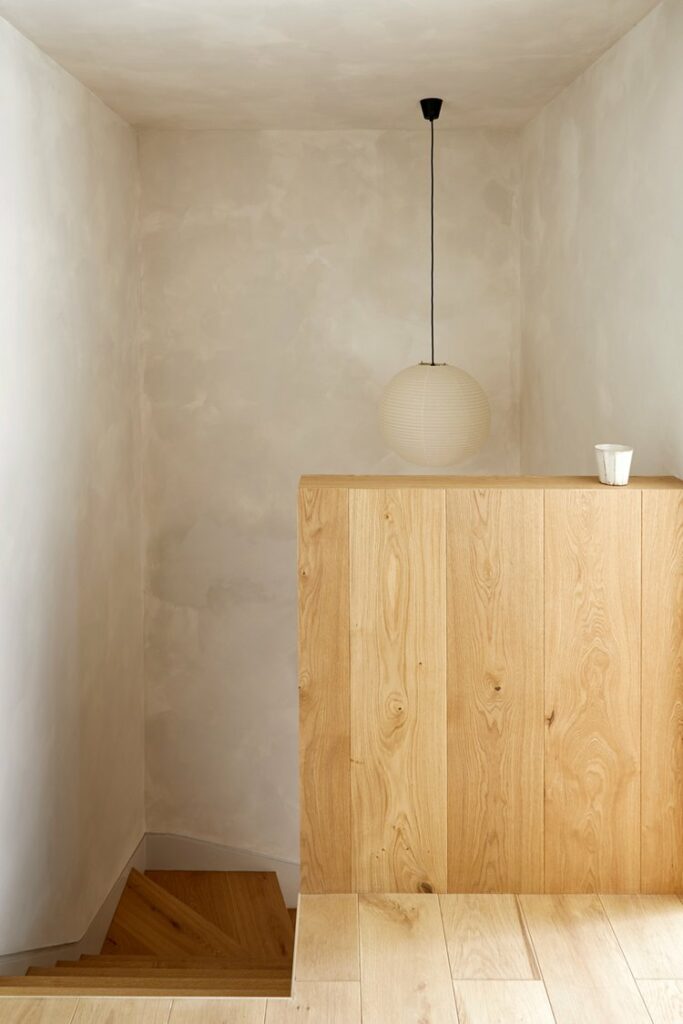
Ma (間) is the Japanese principle of meaningful emptiness — the idea that the space between things is not what is left over but an element in its own right, shaped as deliberately as anything placed within it. Western design tends to read objects as positive and empty space as negative. Japanese design inverts that. […]
Design Principles – 2. Nagame (View)
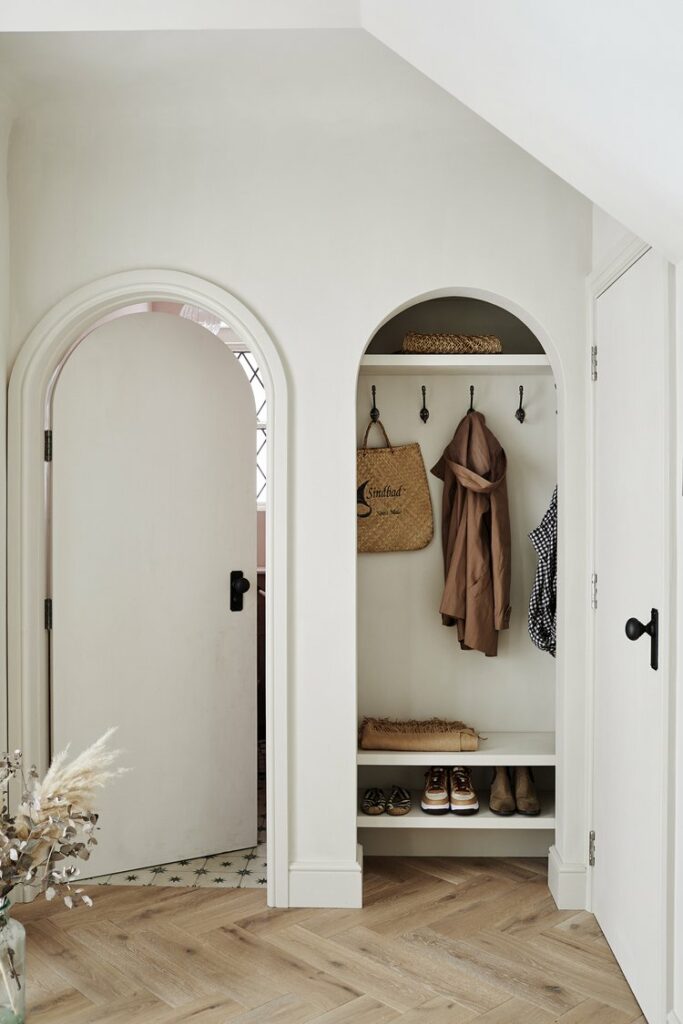
Nagame (眺め) is the Japanese design principle of the framed view — treating a window or a door not as an opening in a wall but as a picture frame, so that what lies beyond is composed deliberately rather than merely visible. It is inseparable from the traditional Japanese house, where shoji screens and sliding […]
Design Principles– 1. Hikari (Light)
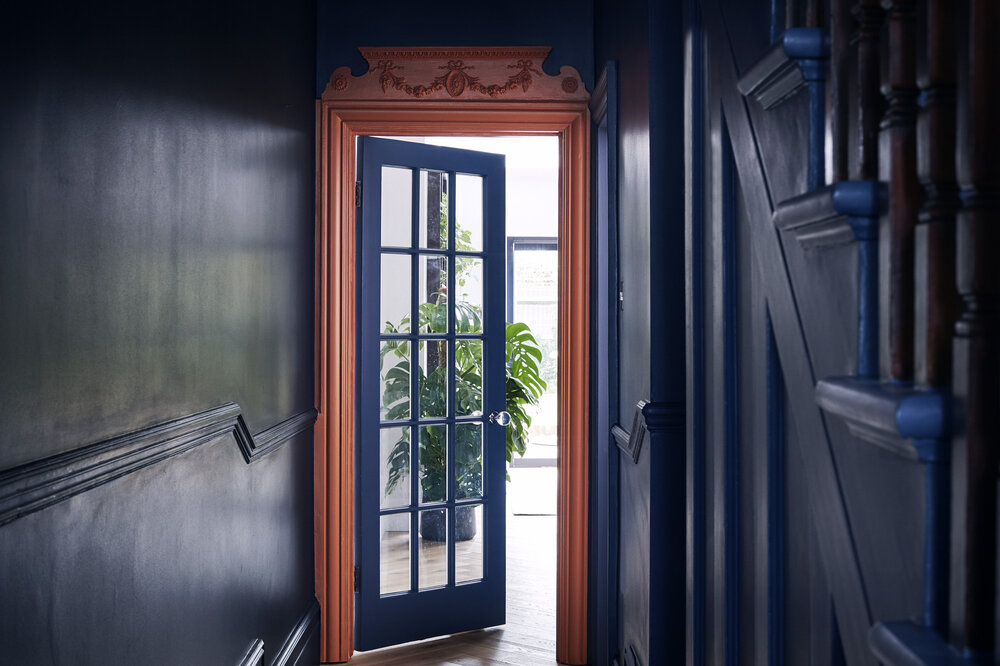
Hikari (光) is the Japanese design principle of light — though in Japanese aesthetics light is inseparable from shadow, and the principle is as much about where darkness is allowed to sit as about how much daylight a room takes in. Jun’ichirō Tanizaki made the case for this in his 1933 essay ‘In Praise of […]