
Nagame (眺め) is the Japanese design principle of the framed view — treating a window or a door not as an opening in a wall but as a picture frame, so that what lies beyond is composed deliberately rather than merely visible.
It is inseparable from the traditional Japanese house, where shoji screens and sliding panels were positioned to hold one particular composition of garden, and where the frame was understood to do as much work as the planting.
Three London projects here, and in each one the frame is doing as much work as what sits behind it: a vertical garden at a Brixton house that freed the ground for an outdoor kitchen while giving every room a green backdrop, a pair of arched openings that answer a period property’s original curves, and an oak-and-lime-wash entrance hall that offers a measured glimpse of the living room beyond.
In Kyoto a framed view is ordinary — the house is built around it. In a London terrace it has to be made deliberately, and usually against the grain of the original plan.
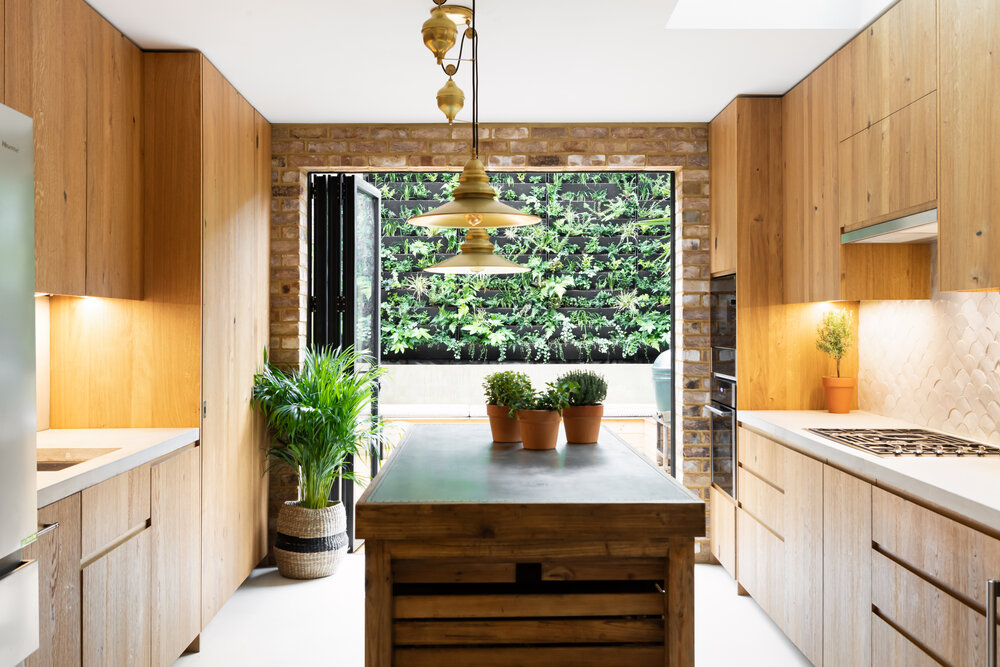
1. Framing the Garden: Culinary Inspired Home
When our client expressed her desire for a vertical garden in the back garden, we envisioned a unique design solution. This vertical garden not only preserved valuable space for outdoor kitchen and dining but also created a lush green backdrop, blending harmoniously with daily views.
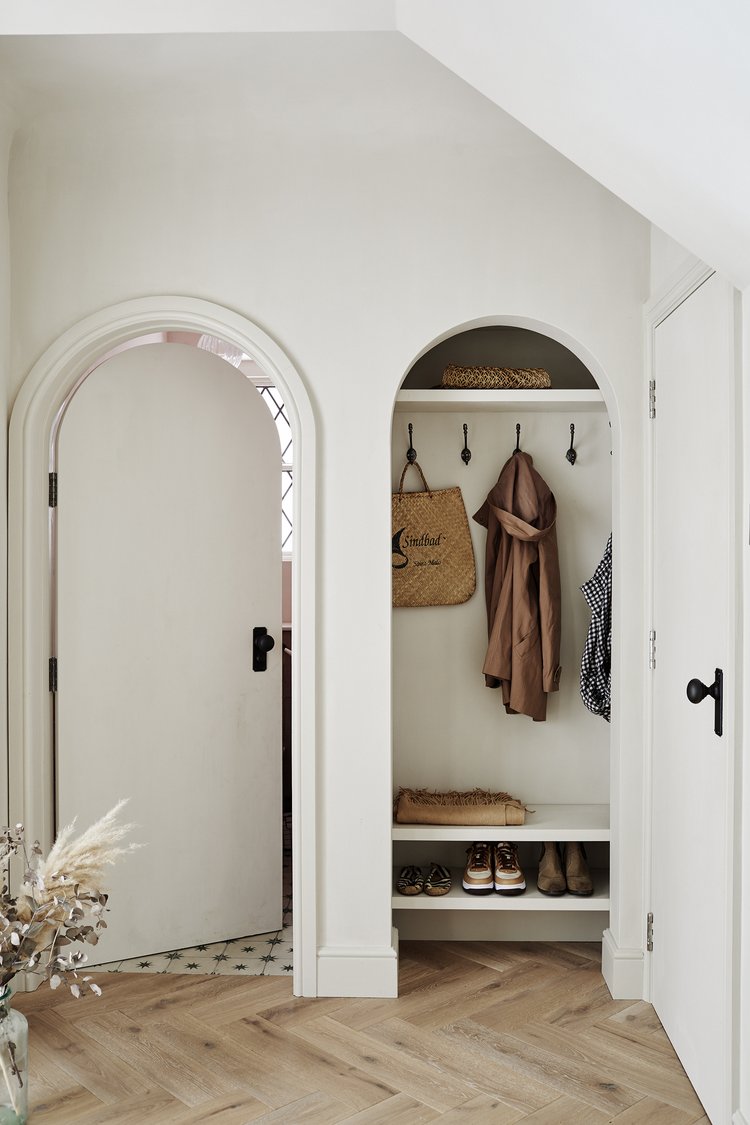
2. Framing the Storage: Architecturally Revived Haven
Inspired by the original curved period features, our Architecturally Revived Haven project took cues from the existing architecture. By framing the door and opening in a pair of arched frames, we stimulated curiosity and intrigue, inviting exploration of what lies behind.

3. Framing the Entrance: Essence of Japan
In an upcoming project that embraces the concept of an urban oasis, we designed an entrance hallway that evokes anticipation and tranquility. The décor, featuring elements such as oak, concrete, and lime wash, sets a serene tone, giving a glimpse of the sophisticated living room beyond.
If you are interested in learning more about Japanese design philosophy, or are considering the ways in which your home can be adapted to create a better sense of calm and balance – this guide is for you.
Learn how Nagame sits within Yūgen and our five guiding principles in The Quiet Beauty of Yūgen.
Both informative and evocative, this guide has been a labour of love and we look forward to hearing your thoughts on it.
Further reading:
How Japanese Designers Turn Windows Into ‘Picture Frames’ — Livingetc, July 2026
‘Nagame’ Is My Japanese Architecture Philosophy of Crafting Meaningful Views — Livingetc, November 2025