
In Japanese design philosophy, Nagame (眺め) refers to the art of framing a view—seeing the outside world not as something separate, but as an extension of everyday life. Hikari (光), light, is treated not as a technical requirement, but as a living presence that shifts through a space over the course of the day.
For many London homeowners, this way of thinking feels increasingly relevant. Busy professional lives are often spent indoors, moving between screens and schedules. Home becomes a place of retreat—yet in period properties especially, gardens can feel distant, visually and emotionally disconnected from daily life. A well-considered rear extension offers an opportunity to restore that connection.
The Opportunity of Rear Extensions
Rear extensions have long been a popular choice for period homes, and for good reason. These properties often suffer from dark rear rooms, compromised layouts, and gardens that are only accessed as an afterthought. The extension becomes the bridge—both spatially and experientially—between inside and out.
Contemporary living has also shifted expectations. Open-plan kitchen, dining and living spaces are now the heart of the home, expected to support family life, entertaining and quiet moments alike. Increasingly, homeowners are seeking more than additional square metres; they want light, flow and a stronger relationship with nature.
A rear extension, when approached thoughtfully, can do far more than add space. It can reorient how a home is experienced—drawing the garden into view, shaping daylight, and creating a sense of calm continuity that extends beyond the walls.
Design Principles for Meaningful Garden Connection
The success of a rear extension is often determined by a handful of deceptively simple design decisions.
Flush thresholds are one of the most powerful. By recessing door tracks and aligning internal and external floor levels, the physical boundary between home and garden is softened. The space reads as continuous rather than divided, encouraging daily movement between inside and out.
Continuous materials reinforce this sense of flow. Flooring that extends visually—or literally—from kitchen to terrace helps the garden feel like a natural continuation of the interior. In some projects, the same material is used inside and out, laid differently to respond to function and weather.
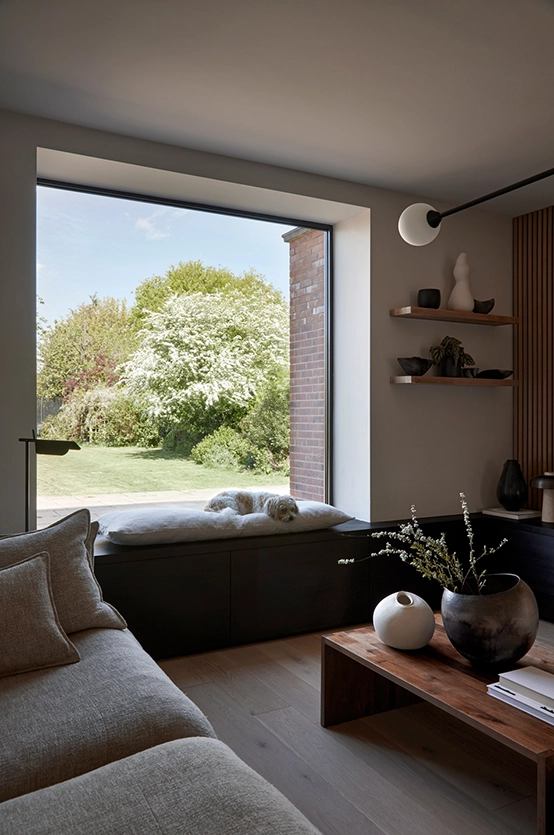
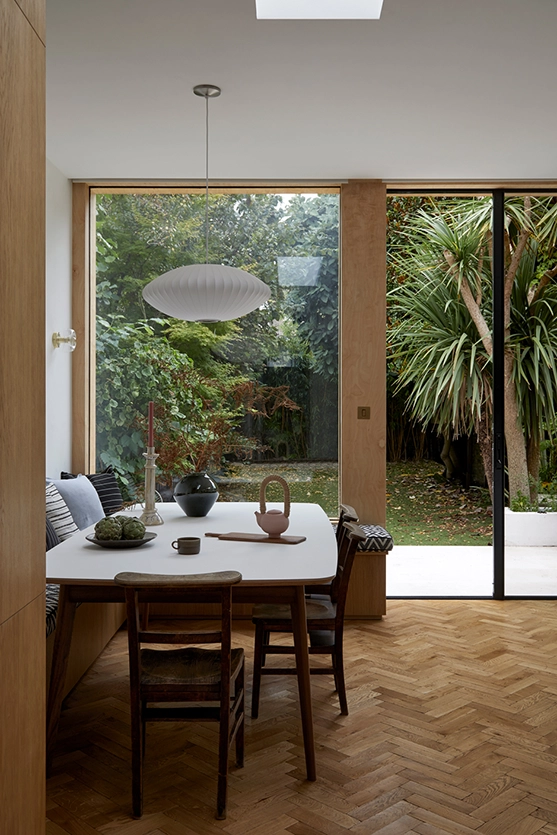
Framing views, guided by Nagame, is equally important. Rather than opening everything up indiscriminately, carefully positioned picture windows can turn the garden into a living artwork. At our Botanic House project in Chiswick, a large picture window was designed specifically to frame lush planting, ensuring that greenery remains present even when doors are closed. The view becomes part of daily rituals—morning coffee, evening cooking—rather than a distant backdrop.

Light as the Transformative Element
Light is often what homeowners notice first after a rear extension—but its impact goes deeper than brightness alone. The Japanese principle of Hikari treats light as a material in its own right, shaping mood, rhythm and comfort.
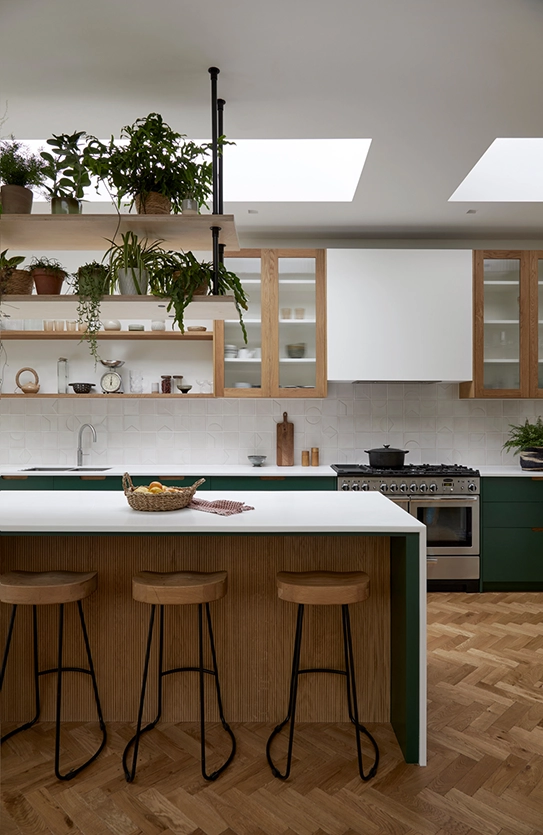
Strategic rooflight placement is key. Rooflights positioned near the junction between the original house and the new extension help draw daylight deep into previously dark spaces. Orientation matters: north-facing rooflights offer soft, even illumination, while south-facing openings require careful shading to avoid overheating.
At our Verdant Oasis project, the introduction of layered natural light transformed how the home was used. As the client noted, it “made a big difference to our mood as we have so much more natural light.” Light here supports wellbeing, clarity and a sense of ease throughout the day.
Natural Materials That Bridge Worlds
Shizen (自然), meaning nature, guides the choice of materials that feel honest, tactile and enduring. In rear extensions, materials play a crucial role in mediating between interior and garden.
Oak brings warmth and continuity, particularly when layered across flooring, joinery and wall treatments. Stone offers visual calm and durability, making it well suited to threshold areas and terraces. Glass, when used with restraint, dissolves visual boundaries while maintaining comfort.
At Botanic House, layered oak textures—from vintage parquet to fluted oak cladding—created depth without visual noise. The materials age gracefully, allowing the space to settle rather than striving for perfection. This quiet material consistency helps the extension feel grounded, cohesive and connected to its surroundings.
At YKD, rear extensions are approached as more than architectural additions. We consider architecture, interiors and garden together, shaping spaces that support how clients live and feel each day. The result is not just more space, but a calmer, more connected way of living.