
Japanese gardens transcend mere scenic beauty – each is a layered, philosophical landscape that embodies a deep reverence for nature. These gardens function as microcosms of the natural world, rich with symbolism and designed to inspire contemplation. Over centuries, distinct styles evolved, each reflecting a unique purpose and context. From the austere Zen rock garden to the lush strolling garden and the rustic tea garden, these classic types all share a common ethos of harmony, simplicity, and metaphor.
Below, we explore three fundamental styles of Japanese garden, along with their history and essence.

枯山水 (Karesansui) – Zen Dry Gardens
Karesansui, or the Zen dry garden, is a landscape composed entirely of stones, gravel, and sand, with little to no water or flowering plants. Instead of ponds or streams, raked white gravel or sand represents water, and rocks or moss stand in for islands and mountains. The name itself means “withered mountains and water,” indicating that natural scenes are evoked abstractly without using actual water. Often found at Zen temples, these dry gardens embrace extreme minimalism: a few carefully placed rocks and patches of moss amid expanses of raked gravel create a scene that feels at once simple and profound. By reducing nature to its essence – rock, sand, minimal greenery – the karesansui distills a vast landscape into a microcosm.
One of the most renowned examples of karesansui is the rock garden at Ryōan-ji in Kyoto, created in the late 15th century during the Muromachi period. This rectangular bed of pale gravel contains fifteen weathered stones arranged in small clusters, intended to be viewed from a seated position on the temple veranda. From any angle, only fourteen stones are visible at once—an intentional choice that invites extended reflection and personal interpretation. With no plants or water, the garden captures the essence of nature through abstraction, offering a quiet space to contemplate balance, impermanence and the unseen.


池泉回遊式庭園 (Chisen Kaiyūshiki Teien) – Strolling Pond Gardens
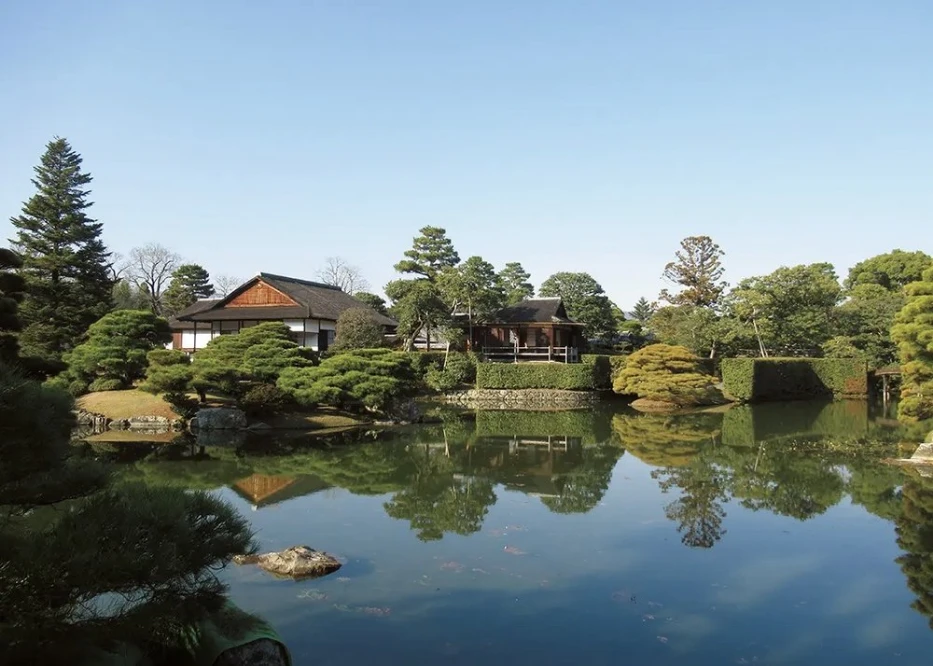
Chisen-kaiyūshiki teien, which translates to “pond-spring excursion garden,” is the grand style of Japanese landscape garden designed for leisurely walking. First developed in the late 16th and early 17th centuries, especially favoured by feudal lords and the imperial elite, these gardens were essentially private parks showcasing artfully arranged nature on a large scale. A strolling garden typically features a central pond or lake with islands, surrounded by a winding path that leads visitors through a sequence of carefully composed views. Along the circuit, one encounters man-made hills (tsukiyama), waterfalls or streams, bridges, lanterns, and pavilions – each element positioned to form an attractive scene from specific vantage points, like a series of living landscape paintings.
A classic example of chisen kaiyūshiki teien is the garden at Katsura Imperial Villa in Kyoto, built in the early 17th century by Prince Toshihito. Centred around a broad pond with islands and rustic teahouses, Katsura’s paths reveal shifting seasonal views—pine, maple, and cherry trees reflected in water. Unlike the stillness of a Zen garden, this style invites movement. As one strolls, the landscape unfolds gradually: a lantern appears by the shore, a hill reveals a distant view. This “hide-and-reveal” approach (miegakure) keeps the journey engaging. Later Edo gardens like Kenroku-en expanded this idea across vast grounds, but the essence remains: scenery revealed slowly, each step offering a new moment of reflection.

露地 (Roji) – Tea Gardens
Roji (literally “dewy ground”) refers to the small, rustic garden that leads guests to a tea house for the formal tea ceremony. Developed in the 16th century by tea masters such as Sen no Rikyū, the roji reflects the wabi-sabi aesthetic of simplicity, naturalness, and humility. These intimate, enclosed courtyards act as transitional spaces from everyday life to the quiet world of tea. A modest gate often marks this shift, with a waiting bench nearby for guests to pause and shed the distractions of the outside world. Beyond the gate, the mood softens further. The winding path, laid with irregular stepping stones and surrounded by moss and foliage, encourages a slower pace and a quietening of the mind.
Every element in the roji is designed to foster calm and presence. A low stone basin (tsukubai) allows guests to wash their hands and mouth—a ritual purification before entering the tea room. A nearby lantern, often moss-covered, casts a soft light that deepens the mood of quietude. Planting is restrained: moss, ferns, evergreens, and perhaps a single seasonal flower. This simplicity evokes the feeling of an untouched woodland. The Konnichian tea garden at Urasenke in Kyoto exemplifies this—its weathered gate, stepping stones and mossy ground create a space that feels far from the world outside. By the time guests reach the tea room, they have left distractions behind. The roji becomes a quiet threshold, preparing both body and mind for the harmony of the tea ceremony.

Though rooted in history and specific cultural contexts, the core principles of these three garden types remain profoundly relevant in today’s world. Each illustrates how thoughtful design can transform even a small space into a sanctuary of tranquillity. In modern homes and cities, one might not recreate a full-scale strolling garden, yet a hint of Zen can be achieved with a little corner of raked gravel and rock, or a tea-garden inspired nook with stepping stones and a sheltering green backdrop. The emphasis on simplicity, natural materials, and seasonal change in Japanese gardens speaks to contemporary desires for sustainable and meaningful spaces. Indeed, a miniature karesansui or roji-style garden in a backyard or balcony can offer a calming retreat from the pace of modern life, inviting moments of reflection and mindfulness. In this way, Japanese gardens continue to inspire designers and homeowners around the world, marrying beauty with philosophy.