
Yūgen (幽玄) is one of the most profound yet elusive concepts in Japanese aesthetics. Rooted in Zen Buddhism, classical poetry, and Noh theatre, it describes a beauty that is subtle, mysterious, and deeply felt rather than overtly expressed.
The word first appeared in Heian-period (794–1185) waka poetry, where it conveyed the emotional depth hidden beneath the surface of experience. In the fourteenth century, the playwright Zeami elevated yūgen into a guiding principle of Noh performance, describing it as an elegant, profound beauty that lies beyond words. Later, the tea ceremony absorbed the same sensibility, reinforcing an appreciation for simplicity, imperfection, and the transient nature of things.
Where Western aesthetics have traditionally valued clarity, symmetry, and the resolved, yūgen invites the opposite: depth over definition, atmosphere over ornament, the quiet power of what is sensed but not fully seen. It is the feeling of watching mist settle over a mountain at dawn, or of walking through a room where every surface, shadow, and silence has been considered.

Yūgen in Architecture and Interior Design
In architecture and interior design, yūgen manifests in spaces that evoke a sense of tranquillity, balance, and quiet discovery. A home shaped by yūgen does not announce itself. It unfolds gradually, revealing layers of thought, materiality, and light that reward attention.
At YKD, our approach to residential architecture is guided by five interconnected principles drawn from Japanese philosophy. Together, they form a design language that balances sensory richness with restraint, creating homes that feel both deeply personal and effortlessly calm.
Hikari — Light
Hikari is the art of designing with light as a material. Rather than flooding a room with uniform brightness, we layer light thoughtfully: the soft warmth of morning sun through a shoji-inspired screen, the gentle glow of dusk reflected off a lime-washed wall, a single pendant that draws the eye upward through a triple-height stairwell.
In our Desert Moon project in Angel, London, a skylight above the stairwell became the starting point for the entire lighting concept. A globe pendant suspended in the void catches and redistributes daylight, creating a thread of light that connects three storeys of the Victorian terrace. This principle of layered, evolving illumination ensures the home feels different at every hour, shifting quietly with the day.
Read more about Hikari in our dedicated article, Design Principles — 1. Hikari (Light).


Nagame — View
Nagame is the practice of framing a view: a single tree, a stretch of sky, shifting light across a garden. It turns an ordinary window into a moment of reflection and connection with the world beyond the walls.
In our Barks & Bliss project in Surrey, we replaced a living area patio door with a picture window that frames the garden where the family’s children and dogs play. Rather than a transparent boundary, the window became a curated view, a living artwork that changes with the seasons and the activity of family life.
Read more about Nageme in our dedicated article, Design Principles — 2. Nagame (View).
Ma — Space
Ma is the Japanese concept of meaningful emptiness. In design, it means that negative space is as important as filled space. A room shaped by ma allows the home to breathe, fostering openness and a sense of calm that cannot be achieved by adding more.
We apply ma by resisting the impulse to fill every corner. In our Essence of Japan project, we left intentional empty wall spaces throughout the house as the client’s brief emphasised the home to be a refuge from their busy work life. Negative spaces allow your eyes and soon mind to settle.
Read more about Ma in our dedicated article, Design Principles — 3. Ma (Space).


Shizen — Nature
Shizen is the principle of designing with nature rather than merely referencing it. This means choosing raw, honest materials—aged wood, natural stone, handmade tiles, linen—and allowing them to age and evolve as part of the home’s story.
At Botanic House in Chiswick, the clients’ love of plants and vintage materials set the direction for the entire ground floor renovation. We layered multiple textures of oak—vintage parquet flooring, oak ply, fluted oak cladding, and oak furniture—creating warmth and depth without uniformity. A custom plant-hanging shelf above the kitchen island, made possible by the three-metre ceiling height, brought the garden inside year-round. The result was a space where nature is not decoration but structure.
Read more about Shizen in our dedicated article, Design Principles — 4. Shizen (Nature).
Taru o Shiru — Less Is More
Taru o Shiru is the philosophy of knowing what is enough. In design, it means that every element must earn its place. Restraint is not deprivation; it is the confidence to let a single beautifully crafted detail speak for an entire room.
This principle runs through every project we undertake. In Desert Moon, a rich terracotta lime wash and an inky blue feature wall were enough to evoke the Nevada desert the clients love, without any literal references. In Verdant Oasis, a living wall in the garden room replaced what could have been a complex decorative scheme with a single, living gesture that became the couple’s favourite place to have morning coffee.
Read more about hikari in our dedicated article, Design Principles — 5. Taru o Shiru (Less Is More).


Why Yūgen Matters in Contemporary Home Design
In an era of constant stimulation and visual excess, there is a growing desire for homes that offer something quieter: spaces that restore rather than perform. The popularity of Japanese-inspired design in Western architecture reflects a deeper shift. People are seeking environments that support how they want to feel, not just how they want to be seen.
A home infused with yūgen is more than aesthetically pleasing. It is a place where life slows, where light and shadow move gently across textured walls, and where nature is invited in rather than shut out. It fosters an unspoken sense of well-being, creating a space that is not just seen but deeply felt.
This is why yūgen has become the foundation of every project at YKD. Whether we are renovating a Victorian terrace in Angel or reimagining a family home in Surrey, the question is always the same: does this space honour the quiet, the felt, and the true? The answer shapes everything from the first sketch to the final detail.
How Yūgen Differs from Wabi-Sabi and Japandi
Yūgen is often confused with wabi-sabi, but the two concepts have distinct origins and applications. Wabi-sabi finds beauty in imperfection and impermanence—a cracked glaze, a worn surface, the patina of age. Yūgen is concerned with depth and mystery: the emotional resonance of a space, the feeling that there is more than meets the eye.
Japandi, meanwhile, is a contemporary style label that blends Scandinavian minimalism with Japanese aesthetics. It tends to focus on surface-level choices—clean lines, natural materials, neutral palettes—without necessarily engaging the philosophical depth that underlies traditional Japanese design.
Yūgen encompasses both wabi-sabi and the material choices associated with Japandi, but goes further. It asks not just what a space looks like, but what it feels like to move through it, to pause in it, to live in it day after day. This distinction is what makes yūgen a design philosophy rather than a design style.

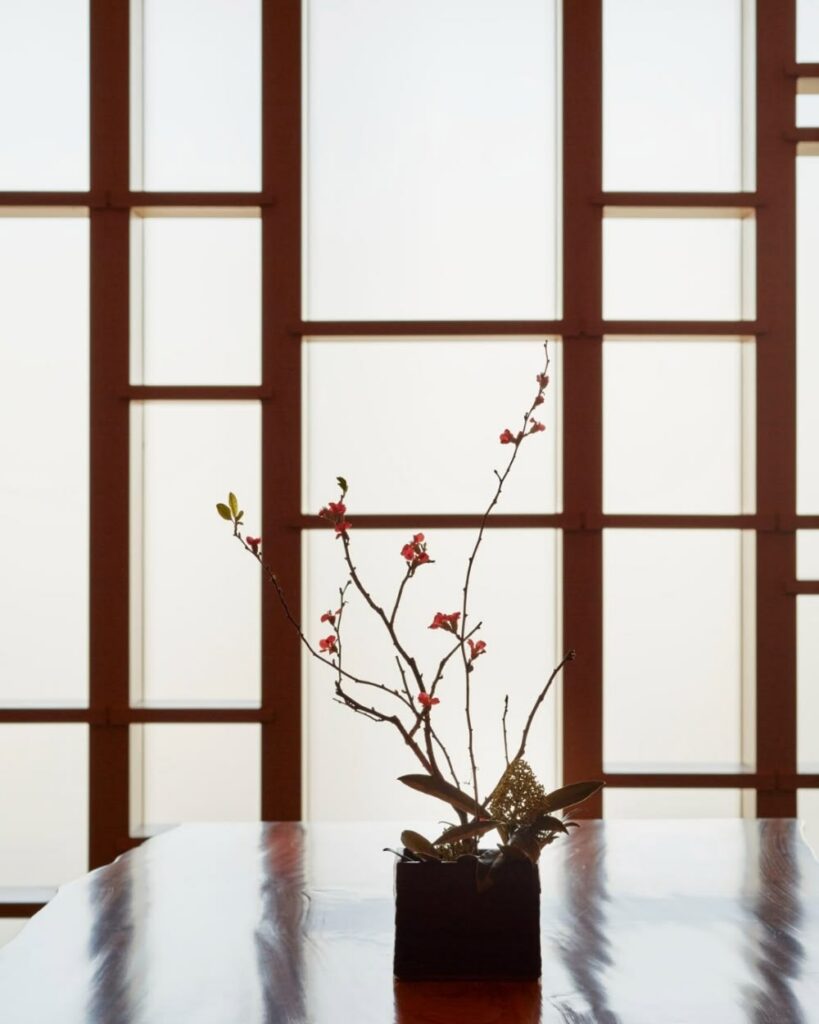
Bringing Yūgen into Your Home
You do not need a full renovation to begin introducing yūgen into your living spaces. The philosophy can inform small, deliberate changes:
Consider your light. Notice how natural light enters your rooms throughout the day. Can you reposition furniture to sit within the path of morning sun? Can you replace a harsh overhead light with a softer, layered alternative?
Create breathing room. Remove one or two items from a surface or shelf. The space left behind is not empty; it is ma—a deliberate pause that allows the remaining objects to be appreciated.
Frame a view. Choose one window and consider what it looks onto. Even in a city, you can frame a sliver of sky, a tree, or the play of light on a neighbouring wall.
Choose materials that age well. Opt for natural finishes—solid timber, stone, handmade ceramics—that will develop character over time rather than deteriorate.
Practise restraint. Before adding anything new, ask whether the room genuinely needs it. The best yūgen-inspired spaces are defined as much by what has been left out as by what has been included.
By embracing yūgen, you are not just designing a home. You are curating an environment where beauty is found in the quiet, fleeting details of everyday life, and where every moment holds space for reflection, connection, and tranquillity.
For a deeper exploration of how yūgen shapes our design process, read Yūgen – Philosophy Behind Our Design.