
Japanese interiors feel calm for structural reasons rather than stylistic ones. Five principles do most of the work: emptiness treated as an element in itself (ma), materials that keep a room connected to the natural world (shizen), knowing when to stop (taru o shiru), honest surfaces that improve rather than degrade with age, and storage designed into the architecture instead of added afterwards.
Those five were the subject of a conversation with AD Spain, published as “5 Golden Rules of Japanese Design to Bring Calm to Your Home”, following earlier coverage in AD Middle East and AD Germany.
This article takes each rule and gives the reasoning underneath it — why natural materials outperform synthetics acoustically as well as visually, why bespoke joinery solves what tidying cannot, and why these ideas suit a small London house particularly well.
As Yoko Kloeden puts it: a home that fills every corner becomes rigid; a home that leaves space can grow with its people.
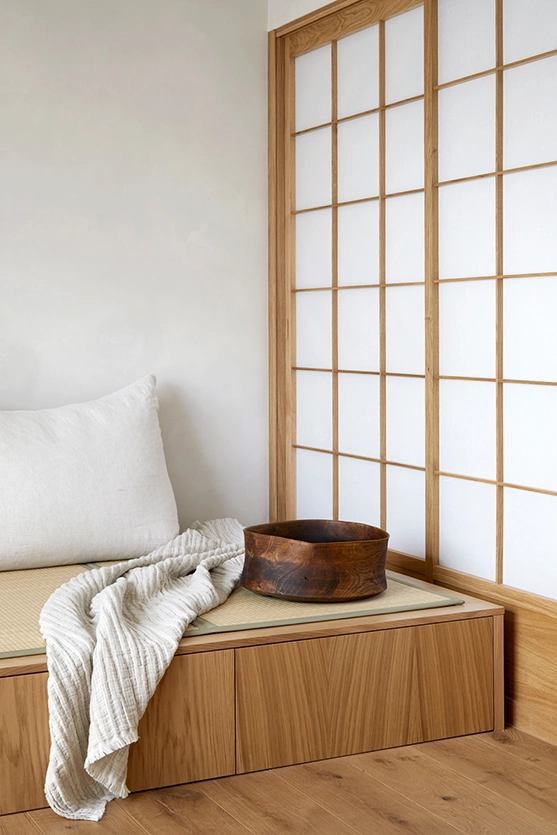
1. Embrace the Power of Emptiness
In the West, emptiness is often misunderstood as lack. But in Japanese design, the concept of Ma — the balance between full and empty — is a foundation for peace. It’s not about stark minimalism but about allowing breathing space for clarity and rhythm.
Think: the pause between furnishings, bare walls that invite soft light, or a sense of spaciousness created through restraint. Visual silence can be just as impactful as a statement piece.
2. Let Nature Ground You
The principle of Shizen, or harmony with nature, means our homes should not shut out the world outside, but converse with it.
Natural materials like wood and stone, filtered daylight, and framed views are not aesthetic choices — they’re emotional anchors. They provide timelessness, calm, and connection. A home should feel rooted in place, not removed from it.
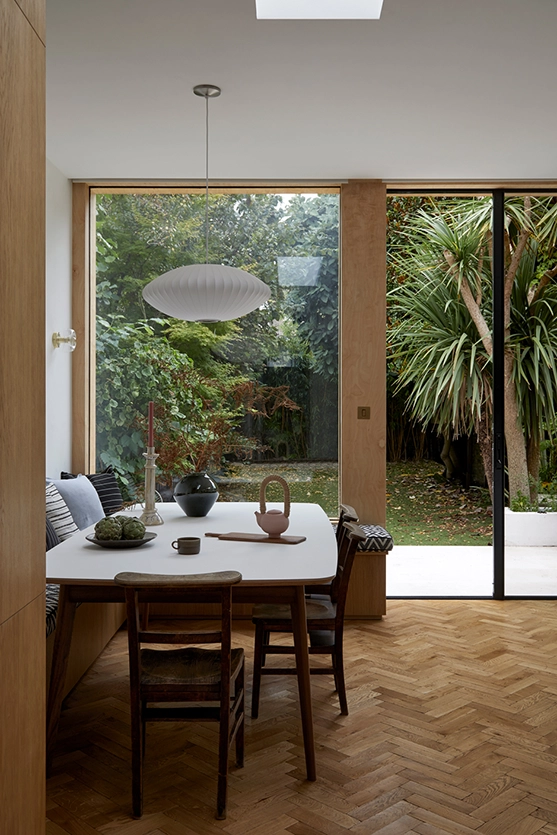

3. Know When to Stop
The third principle, Taru wo Shiru, translates to “the satisfaction of enough.”
True calm comes not from abundance but from intention. Reducing clutter and making peace with sufficiency gives greater meaning to what remains. This isn’t austerity — it’s clarity. “Less but better” is not a trend, but a discipline.
4. Prioritise Honest Materials
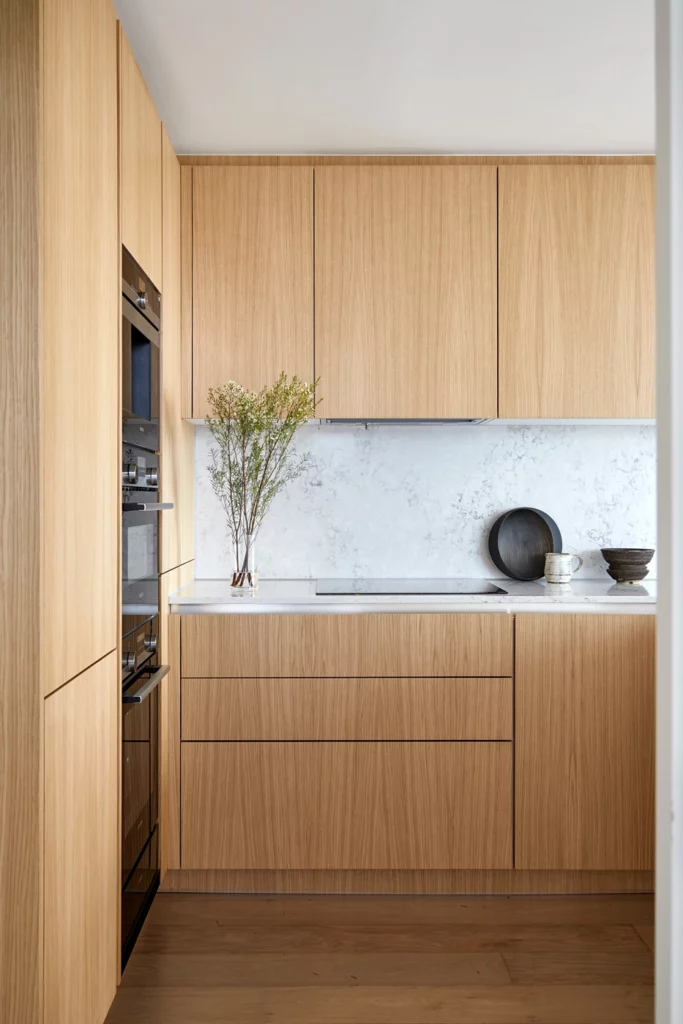
In Japanese homes, wood is not a backdrop — it’s a living presence. Oak, cedar and hinoki offer not only warmth and tactility but improve with age, gaining patina and soul.
Unlike synthetic surfaces, natural materials soften acoustics, modulate light, and connect us to something older than fashion. When you choose materials that grow old with grace, your space gains quiet confidence.
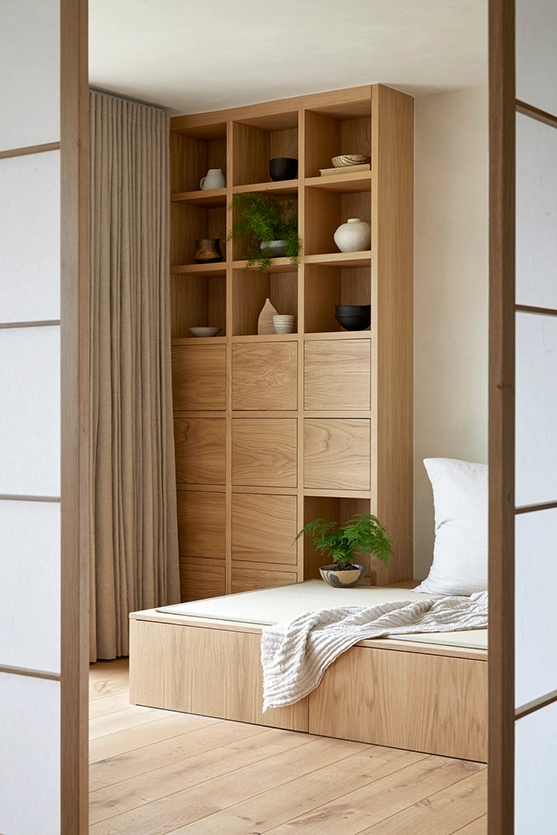
5. Design Order from the Start
Order is not about perfectionism — it’s architecture. At YKD, we design storage into the bones of the home: bespoke joinery, hidden wardrobes, multi-purpose benches.
Every item has a place, so surfaces can stay calm and objects with meaning can breathe. This is order that supports daily life, not order that demands it.
These five rules are drawn from Yūgen, the Japanese aesthetic that guides all our work.
Many of our clients live in London homes with limited space and busy lives. Japanese design is not reserved for grand houses — it thrives in small, flexible, real-world homes.
Start by letting go of what no longer serves. Choose multi-purpose layouts. Select fewer but better materials. A home doesn’t need to be big to feel calm — it needs to be designed with care.
The article closes on a powerful note: Japanese interiors stand the test of time because they are not built on trends, but on human nature.
In Yoko’s words:
“A home that fills every corner becomes rigid. A home that leaves space can grow with its people.”
This principle sits at the heart of everything we do. A Japanese interior isn’t trying to be perfect — it’s trying to be alive.
Read the original AD Spain article here.
Further reading:
5 Things Japanese Households Do to Make Homes Feel Calm That Are Simple and ‘Undramatic’ to Follow — Livingetc, August 2026