
Taru o Shiru (足るを知る) translates directly as knowing what is enough — a principle of sufficiency rather than scarcity, and one that sits closer to editing than to minimalism.
At Ryōan-ji in Kyoto a stone tsukubai water basin carries four characters, 吾唯足知, arranged around a central square opening that doubles as the radical each one needs. Read together they say ‘ware tada taru o shiru’: I know only what is enough. The basin is traditionally said to have been given by Tokugawa Mitsukuni.
This article shows what enough looks like built: a bedroom for clients who already slept on a mattress laid on tatami and wanted no bedside tables, where a grained oak headboard and Isamu Noguchi’s Akari lamps supply the only light; a Brixton garden that became an urban oasis by going vertical rather than extending; and a deliberately utilitarian kitchen that steps back so the rest of the house can speak.
This is not extreme minimalism, and it is not really about owning less. The distinction is between having less and having what matters.
1. Knowing What is Enough
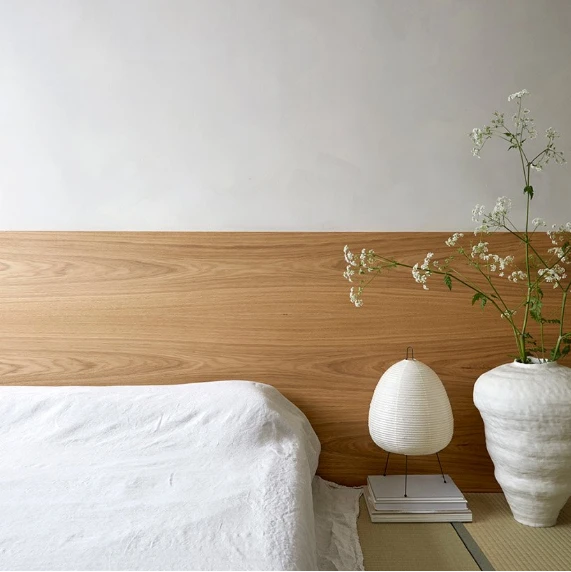
In the Essence of Japan project, our clients from Hong Kong brought this principle to life. They had already adopted the practice of sleeping on a bed mattress placed directly on tatami, the traditional Japanese rush grass mats used for flooring. In addition, the clients opted out of bedside tables, allowing the space to remain uncluttered. To enhance this minimalistic approach, we designed a grained oak panel to serve as a bed headboard, with only bedside illumination provided by Akari lamps designed by renowned Japanese designer Isamu Noguchi. This collaboration with clients who embraced minimalism was truly joyful.
2. Utilising Underused Space
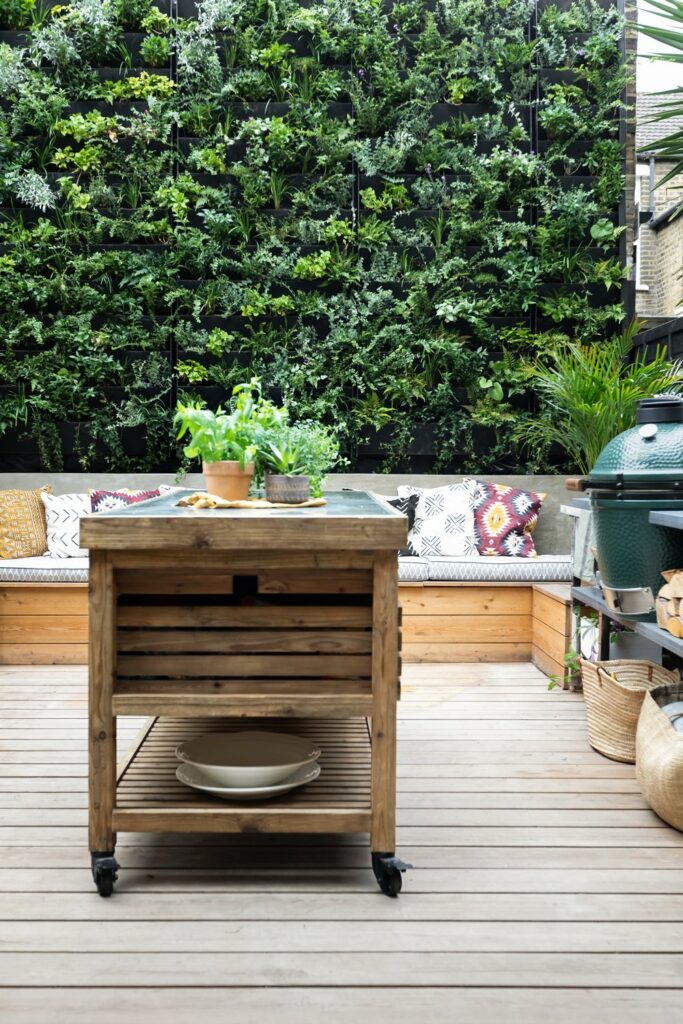
Our Culinary-Inspired Home project presented a unique challenge – transforming the rear garden into an urban oasis while maintaining the existing footprint. In such urban settings, creativity often flourishes in response to limited space. We opted to go vertical, installing a lush vertical garden that became a restorative backdrop visible from every ground floor room. Here, the underused vertical space was transformed into an essential element of the home’s design, demonstrating that even in the most confined spaces, beauty and functionality can thrive.
3. Less is More
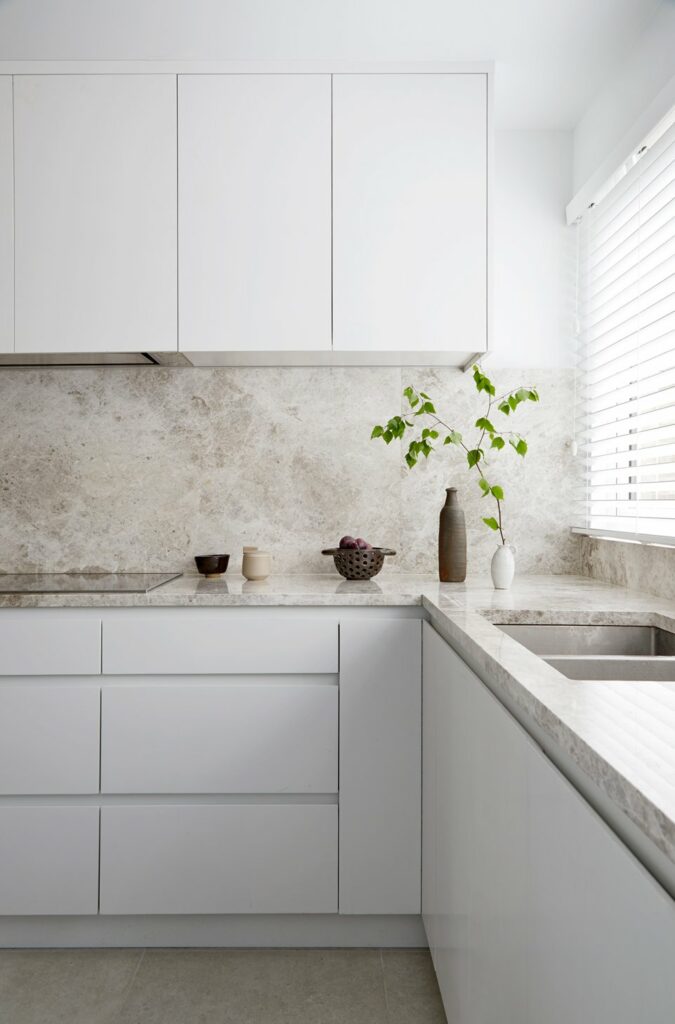
The Essence of Japan project showcased another facet of Taru o Shiru, particularly in the kitchen. Unlike other rooms in the house, which embraced warm oak flooring and lime wash painted walls, the kitchen was designed with a utilitarian and functional approach. Minimalistic kitchen doors were complemented by striking grained marble countertops and splashbacks. This sleek and practical kitchen seamlessly merged form and function, embodying timeless design.
In conclusion, the principle of Taru o Shiru invites us to pause, reflect, and recognise the profound joy that comes from letting go of the unnecessary. It’s not about advocating for extreme minimalism but about understanding the essence of what truly matters.
Read about how this principle sits within Yūgen and our design philosophy in The Quiet Beauty of Yūgen.
We’ve thoroughly enjoyed sharing these Japanese design philosophies with you, and we hope they inspire your own home projects. If you’re considering ways to infuse your living space with a greater sense of calm and balance, we invite you to explore our free and exclusive guide, which delves deeper into these principles. Your journey towards a more harmonious home begins with a click to this link.
Further reading
Taru O Shiru (足るを知る) Translates to the ‘Luxury of Enough’ — Livingetc, August 2026