
I grew up in Kyoto, visiting the Katsura Imperial Villa grounds as a child. I first visited Versailles as a university student. Two gardens built in the same century, on opposite sides of the world, both extraordinary — and yet the feeling of being inside each could not be more different. One makes you feel powerful. The other makes you feel present.
This is not a history lesson. It is about what those two gardens reveal — as living philosophies that still shape how we design outdoor space today. And about why, as the climate shifts and our relationship with nature changes, one may prove more useful than the other.

Two Gardens, Two Words
Even the language reveals the difference. The English word “garden” descends from terms meaning an enclosed yard — originally for keeping livestock. A bounded, practical space. The Japanese word niwa (庭) originally meant a sacred clearing — ground prepared for enshrining divine spirits. A spiritual void, not a utilitarian plot.
That split — pragmatic enclosure versus sacred ground — shaped everything that followed. European gardens evolved through monastery herb plots, Renaissance geometry, and finally the grand formal estates where nature was clipped, ordered, and subordinated to human intent.
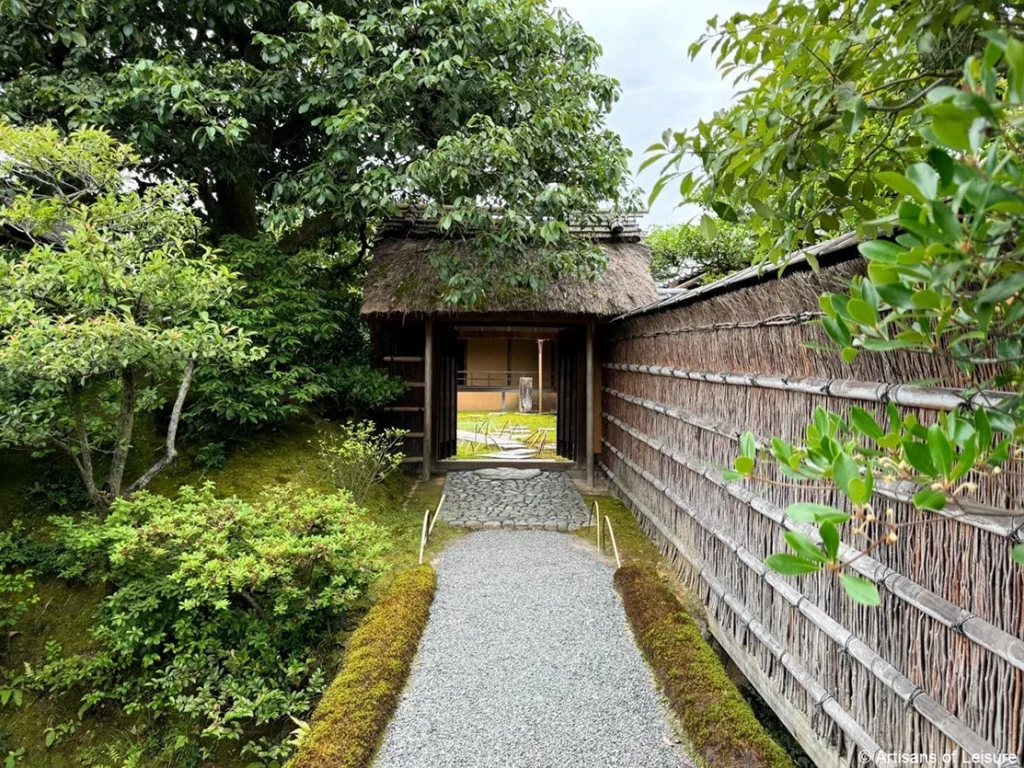
Japanese gardens evolved through Shintō reverence, Zen abstraction, and the strolling gardens of Kyoto — where rocks and water carry spiritual weight, and the designer’s task is not to impose order but to reveal what is already there.
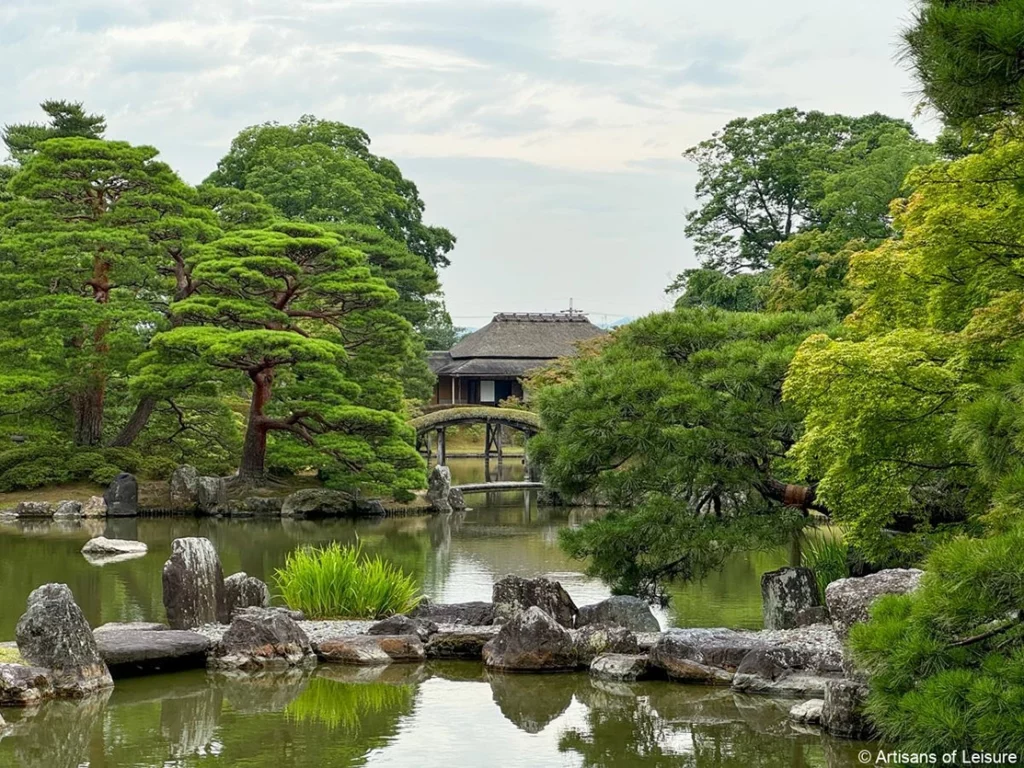
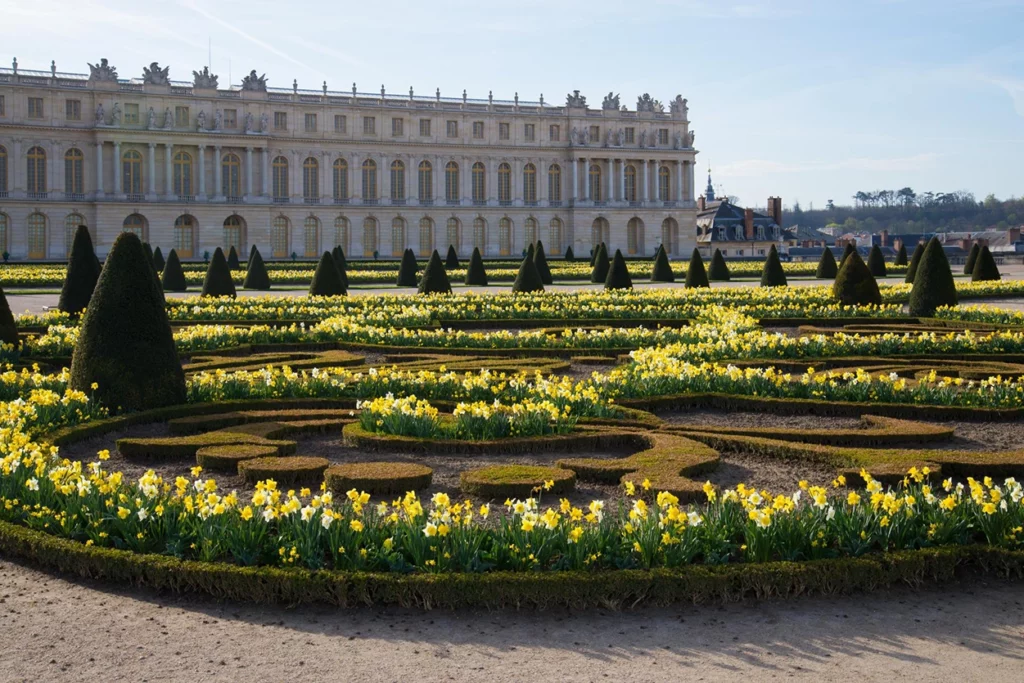
Both traditions reached their fullest expression in the seventeenth century. At Versailles, beginning in 1661, hundreds of topiary trees were shorn into geometric shapes and every vista terminated in a fountain or statue celebrating human artifice. At Katsura, begun around 1620 in Kyoto, a sequence of pavilions and pathways unfolded around a central pond — no single commanding axis, no imposed symmetry, every view composed to be discovered gradually.
Control vs Coexistence
The deeper contrast is not aesthetic. It is philosophical — about what each garden says about our relationship with nature.
European formal gardens expressed human dominance. Nature was something to be moulded, tamed, perfected through reason. Symmetry, groomed allées, sculpted hedges — an aesthetic that proclaims control. The building was master and the garden its ordered servant. At Versailles, nothing was left to chance: even exotic orange trees were collected in an Orangerie to demonstrate mankind’s command of seasons.
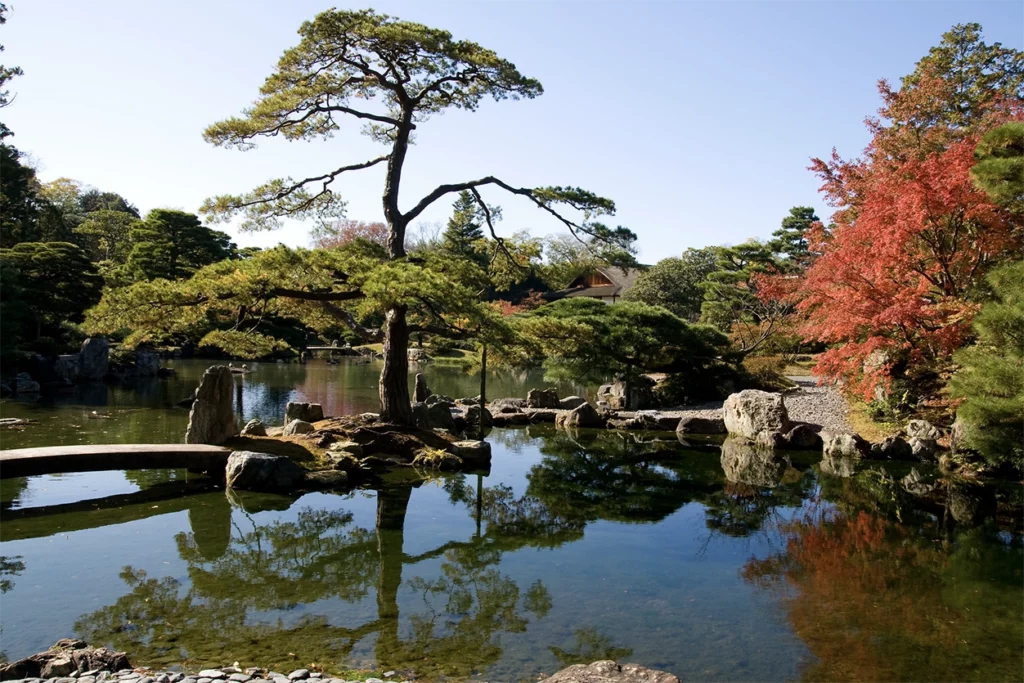
Japanese gardens expressed the opposite. Humanity as part of nature’s fabric, not above it. Asymmetry as a guiding principle — because in nature no two elements are identical, and a slight imbalance yields vitality. Plants encouraged to look naturally elegant, never forced into geometric shapes. Rocks and ancient trees honoured as dwelling places of kami (spirits) in the Shintō tradition — to be respected, not reshaped.
The difference extends to how you move through each space. At Versailles, movement is choreographed along straight lines, with a single dominant axis. In a Kyoto strolling garden, movement follows winding paths that yield momentary pauses and shifting perspectives — each turn revealing a new composition. The garden unfolds. It does not declare. For more on the specific traditions that shaped this approach, read The ABC of Japanese Gardens.

Why This Matters Now
Europe’s famously temperate climate is shifting. Heatwaves and drought are stressing the very gardens that embody the control tradition. Researchers at Cambridge University have noted that repeated extreme seasons are making conventional approaches increasingly difficult to sustain — the high-maintenance herbaceous border that demands constant watering is becoming outmoded. Lawns brown. Water-dependent planting fails. The manicured ideal is proving fragile precisely because it was designed for a climate that no longer reliably exists.
Japanese garden philosophy was forged in a climate far more volatile than Britain’s — typhoons, monsoons, earthquakes. It developed resilience by design: celebrating seasonal change rather than resisting it, using climate-appropriate planting, accepting impermanence as a source of beauty rather than a problem to solve. The falling cherry blossom, the bare winter branch, the patina of aged stone — these are not failures. They are the garden working as intended.
This is not nostalgia. It is practical foresight. Designing gardens that work with local conditions rather than against them — permeable surfaces, trees positioned to provide natural shade in summer and admit light in winter, planting that does not demand year-round irrigation — is how we build resilience into the domestic landscape. And it applies as readily to a compact London terrace garden as to a Kyoto estate. We explored this broader environmental shift in our article Designing for Climate Change.
Listening Before Drawing
When we approach garden design as part of a London renovation, we are not recreating a Japanese garden. We are applying an attitude — one that listens to the site before imposing a plan. Where does the sun fall across the day? What grows here naturally? How does the garden feel from the kitchen table in January, not just in the photographs taken in July?
This means designing with seasonal rhythm in mind. Structure and planting chosen for how they change across the year, not for how they look on a single afternoon. It means ensuring the view from inside remains alive in every season — not bare and forgotten for half the year.
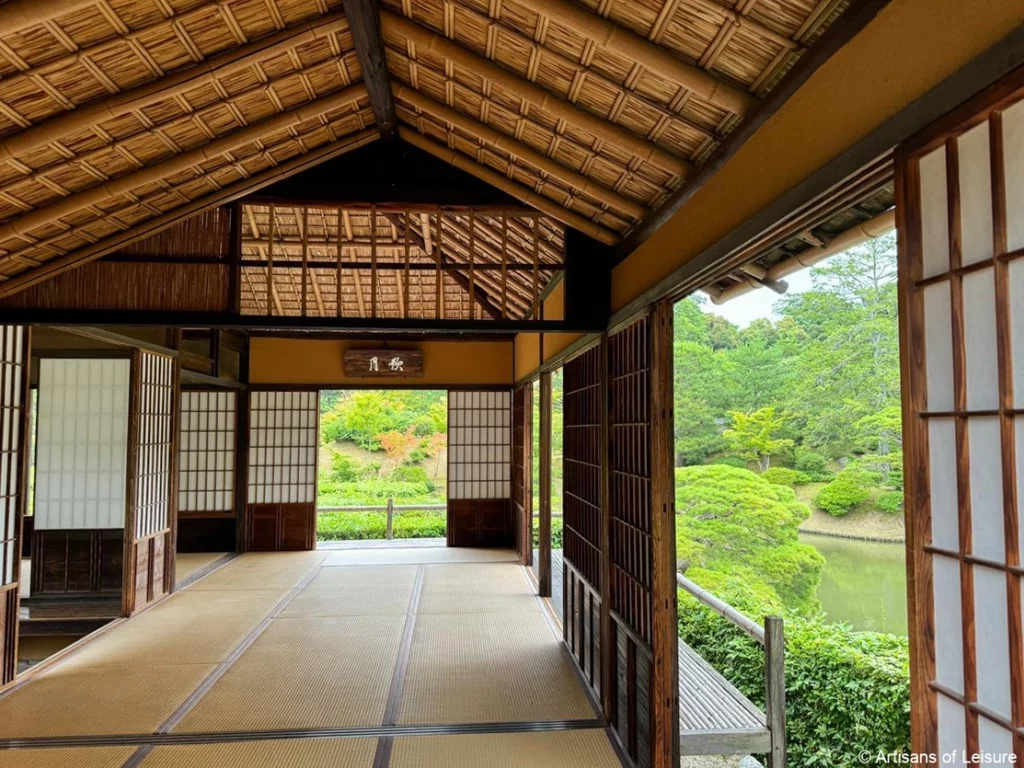
It also means rethinking what a garden is for. Not a decorative frame for the house, but an active part of how the home breathes, cools, and connects its inhabitants to the rhythms of the natural world. In Japanese thinking, the garden is not separate from the architecture — it completes it. The boundary between inside and outside is a threshold to be dissolved, not a wall to be maintained.
This is why the garden is part of the brief from Day 1 in every project we take on. It is why the garden designer sits in the same concept conversation as the architect and interior designer. And it is why, increasingly, the most considered homes feel less like objects placed in a landscape and more like quiet responses to it. For more on how this works in practice, read Why Your Garden Needs an Architect.
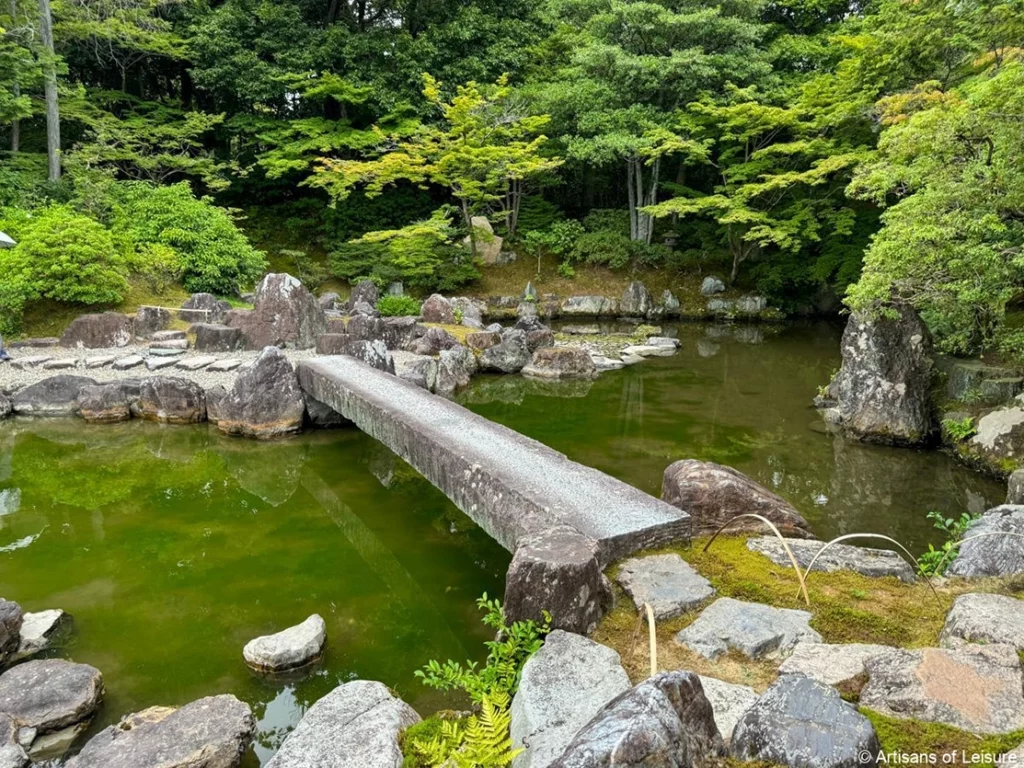
Versailles and Katsura are both masterpieces. Both deserve admiration. But they ask different things of the people who inhabit them. One asks you to look outward and admire what human will has achieved. The other asks you to sit still and notice what was always there.
In a world growing less predictable and more in need of calm, I know which question I would rather a home asked of its inhabitants.